
A Home for History: The Journey of the North Carolina Museum of History
The museum’s history began in the nineteenth century with a handful of artifacts. Today, the museum stewards over 150,000 in our collection. For almost 125 years, we have had the privilege of stewarding pieces of North Carolina’s treasures.
Early Years
Driven by a passion for preserving his state’s rich history, newspaperman Frederick Augustus Olds traveled to every corner of North Carolina, gathering artifacts and listening to local citizens’ stories about each item. What started as a passion project to document and preserve North Carolina’s rich history soon evolved into a lifelong mission, as Olds became a pioneering advocate of social history. He believed that the past should be preserved not only through documents and artifacts but also through the voices and experiences of everyday people.
In 1898 a gallery of historical artifacts was set up with the State Museum, now the North Carolina Museum of Natural Sciences, within the old Agriculture Building in Raleigh. As Olds’ collection grew, so did the need for a dedicated space. In 1902 the Hall of History was established, combining Olds’ private collection with historical materials from the State Museum. The Hall moved several times, gaining recognition as the state’s central history museum.
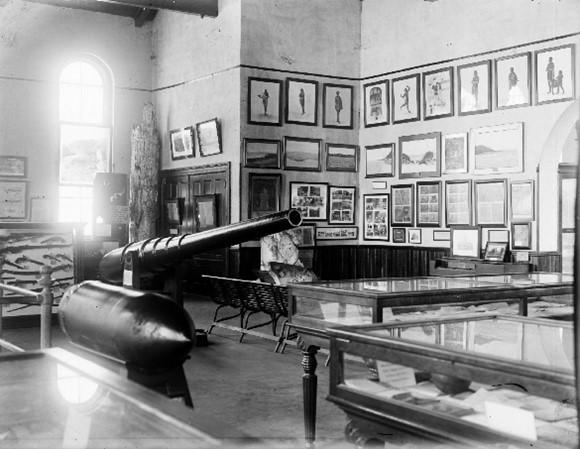
Hall of History Gallery, circa 1902
Becoming the North Carolina Museum of History
By the 1960s, public interest in history was growing, and the museum’s collection had expanded significantly. In 1965 the Hall of History was officially renamed the North Carolina Museum of History, reflecting its broader mission. Three years later, the museum moved into the Archives and History Building, now the NC Department of Natural and Cultural Resources Building.
This move marked a new era for the museum, offering a dedicated space for public access to exhibits, educational programming, and preserving North Carolina’s heritage. It also set the stage for the museum’s continued growth as a leading institution for historical exploration.
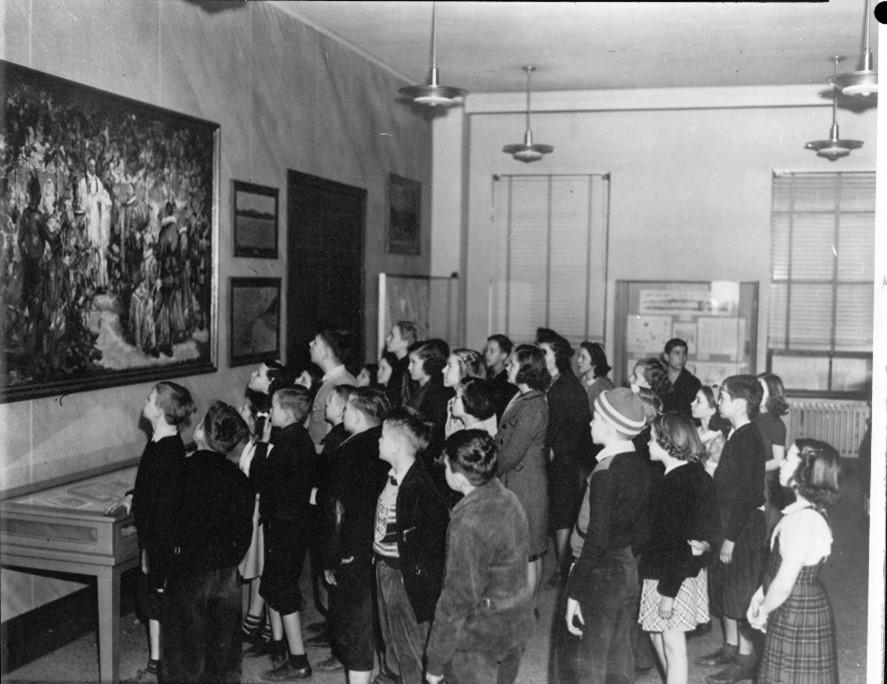
A group of students explores the Hall of History, circa 1940s
A Home for History
By the early 1980s, the museum had once again outgrown its space. With plans for expansion, the state decided to construct a dedicated building tailored to the museum’s needs. Groundbreaking took place in 1988 at 5 East Edenton Street in Raleigh. On April 23, 1994, the museum opened its doors in its current home—its first standalone facility.
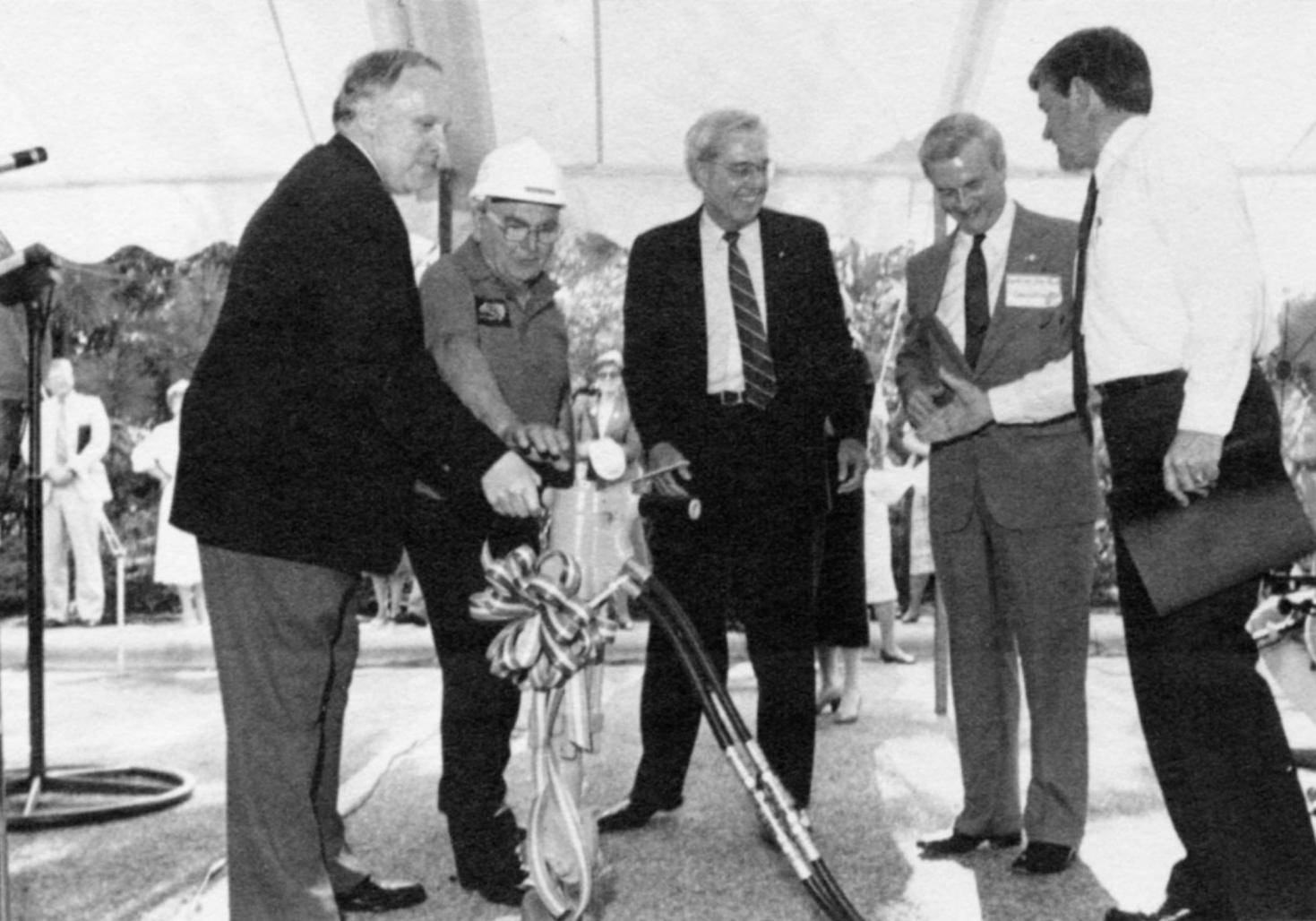
Staff at the 1988 groundbreaking ceremony
This move was transformative, offering more space for exhibitions, educational programs, and community events. It allowed the museum to expand its reach, bringing North Carolina’s history to life for visitors from across the state and beyond.
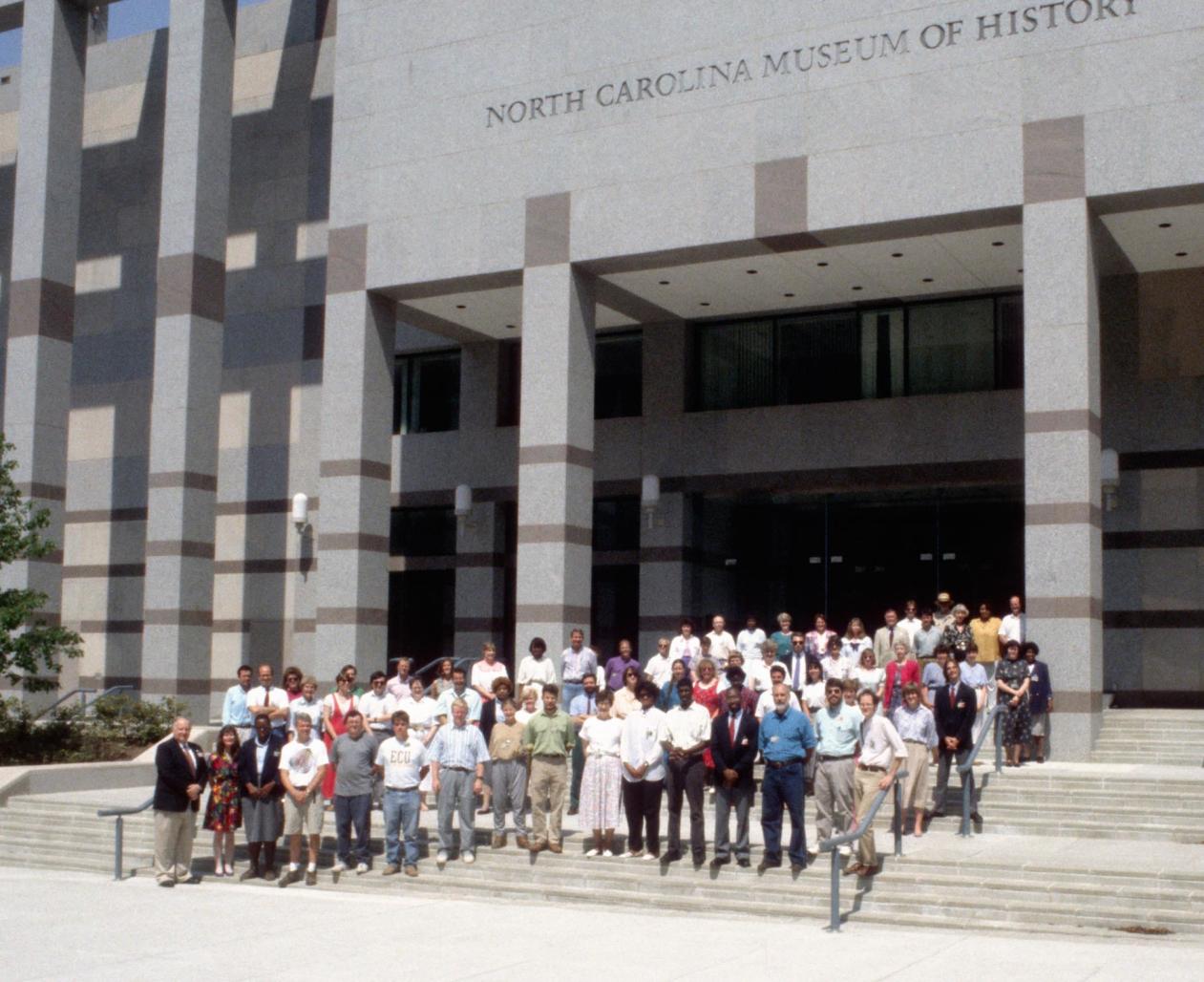
Staff at the newly constructed museum at its home on 5 East Edenton Street in Raleigh, circa 1995.
Looking Ahead
Now the museum is undergoing another transformation to create a state-of-the-art institution for the future. The renovation will introduce both new and renovated exhibits, cutting-edge preservation efforts, and enhanced visitor experiences. These improvements will ensure that North Carolina’s stories can continue to be shared for generations to come.
While the building is closed, museum staff remain dedicated to bringing history to the public through virtual programs, events, and digital resources. History never pauses—and neither does the North Carolina Museum of History.