Join the NC Museum of History for our brand-new program: the Plott Hound Literary Circle!
This book club is a bit different from traditional book clubs. Here’s how it works:this year’s book will be announced in partnership with the North Carolina Writers’ Network. Each selected book will have a strong North Carolina connection, either through the author or the subject of the book.
Over the next few months, we will periodically share resources related to the book. Feel free to use them either on your own or with your book club! Then we wrap up in the spring by welcoming the writer for a special virtual author talk.
Sign up for the program to hear the author share their experience writing the book. You may have a chance to ask them your questions!

This program is in partnership with the North Carolina Writer's Network.
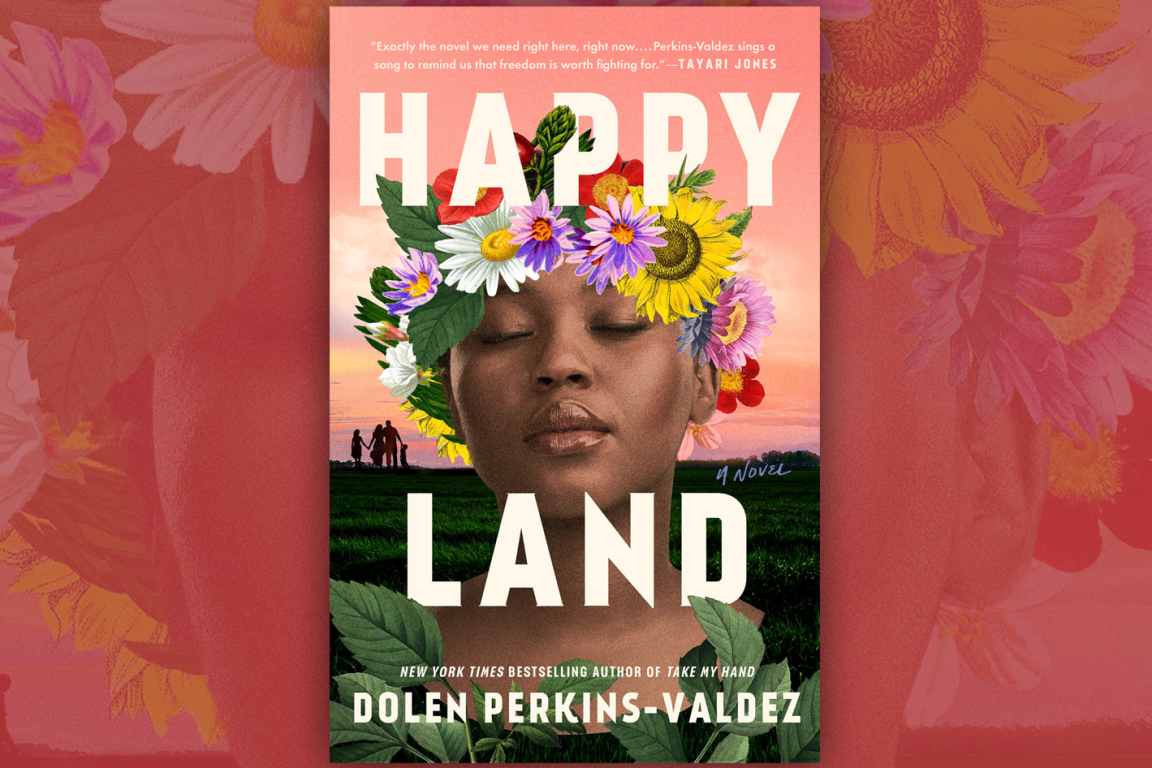
Book Selection: Happy Land
Nikki hasn’t seen her grandmother in years. So when the elder calls out of the blue with an urgent request for Nikki to visit her in the hills of western North Carolina, Nikki hesitates only for a moment. After years of silence in her family, due to a mysterious estrangement between her mother and grandmother, she’s determined to learn the truth while she still can.
But instead of answers about the recent past, Mother Rita tells Nikki an incredible story of a kingdom on this very mountain and of her great-great-great grandmother, Luella, who would become its queen.
It sounds like the makings of a fairy tale—royalty among a community of freed people. But the more Nikki learns about the Kingdom of the Happy Land, and the lives of those who dwelled in the ruins she discovers in the woods, the more she realizes how much of her identity and her family’s secrets are wrapped up in these hills. Because this land is their legacy, and it will be up to her to protect it before it, like so much else, is stolen away.
Inspired by true events, Happy Land is a transporting multi-generational novel about the stories that shape us and the dazzling courage it takes to dream.
Description by Penguin Random House.
Book Discussion Questions
- When we first encounter Nikki in the book, she feels a distinct disconnect from her family, her history, and her grandmother. How does her understanding and perspective of her family history, her grandmother, and herself change by the end of the book?
- Land is an important theme within Happy Land. What historical, emotional, and political impact does land have on the characters in the book? In what ways does the novel explore the theme that land can make an individual vulnerable and powerful?
- Perkins-Valdez uses storytelling to explore broader historical truths throughout the novel. How do we use storytelling in our own family histories, and whose responsibility is it to protect those histories and share them with future generations?
- What similarities do you find between the challenges experienced by characters in Happy Land and current issues surrounding race, displacement, and land ownership?
Contextual Statement
In 1865, after the end of the Civil War, formerly enslaved people living in North Carolina began the process of building lives independent of their previous enslavement. This period was known as the Reconstruction era. Many African Americans worked to establish their own communities by purchasing land, starting schools, and founding religious centers. But they faced another challenge—living under Jim Crow laws. These were local and state laws, mostly in the South, that enforced racial discrimination and segregation from the late 1800s through the mid-1900s. These laws affected almost every area of life for previously enslaved people and led to events like the Wilmington Massacre here in North Carolina. Jim Crow laws had lasting impacts on generations of African Americans. The book Happy Land explores these and other themes, struggles, and triumphs set against the backdrop of western North Carolina.
Book Resources
The Fate of Raleigh’s 11 Missing Freedmen’s Villages Context Statement
In the years after America’s Civil War, more than 4,000 men, women, and children—roughly half of the city’s population at that time—all freed from nearby plantations, formed 13 freedmen’s villages in and around Raleigh. These new residents were starting their free lives with no jobs, no homes, and no money. Still, they pulled together to build homes, churches, schools, and businesses. Despite all their work and contributions, of the 13 villages formed during this time, only Oberlin Village and Method remain today. Many historians don’t even agree on the other 11 villages’ names, let alone where they were located or what happened to them.
Reflection Question
In the novel, much of the history of Happy Land is lost, forgotten, or hidden, surviving through oral histories and a couple of items that are only special to those who know their historical importance and relevance. What are some of the ways that Happy Land explores lived versus recorded histories? Whose responsibility is it to make sure these histories are carried forward into the future?
Additional Resources
Want to Learn More?
- Any resident of the state can get a library card with the State Library for free by applying online. A library card provides users with access to a large variety of our in-person and online resources.
- Online Research Guide, "Beginning Genealogy Resources," which is a great primer for getting started, and this is the main webpage for our genealogy resources at the GHL.
- The State Archives' oral history program information online.
- NC Museum of History Collections Search: https://www.ncmuseumofhistory.org/collections
- Oral history recordings are available on the NC Digital Collections website.