
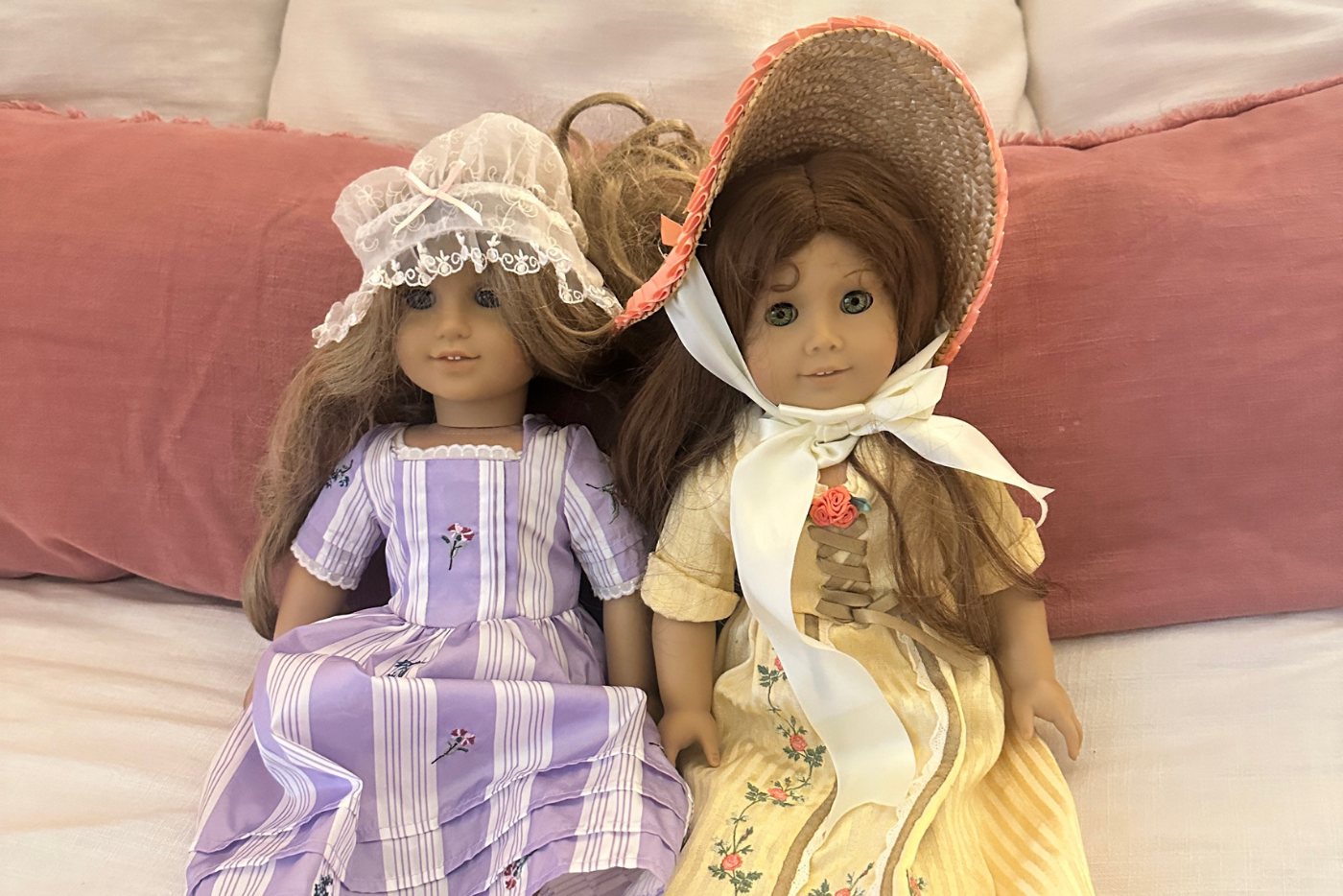
Returning to Felicity’s Story—Alexa
For the second installment in our rereading the American Girl Felicity series, we picked up Happy Birthday, Felicity! In this American Girl book, spring has arrived in Williamsburg, Virginia, and Felicity is looking forward to turning 10. She spends time tending her garden, awaiting her grandfather’s visit, going to school with her friend Elizabeth, and preparing for her birthday celebration.
One of the things that makes this story memorable is the birthday celebration itself. Felicity receives a treasured family heirloom: a guitar. As I reread the book, those scenes immediately brought back memories of my own childhood with Felicity. I remember receiving Felicity’s tea outfit and guitar for my own birthday, coincidentally a day before hers.
Reading the book again now, I notice moments of tension that completely went over my head. Back then, I was focused on the fun parts. I related to Felicity goofing off at school, teasing Elizabeth’s older sister Annabelle (nicknamed “Bananabelle”), and hoping she would get the birthday celebration she wanted. This time, I felt the tension that Felicity’s parents must have felt as the Revolution crept closer to home.
Changes in Season—Colleen
Soon we will celebrate the 250th anniversary of the signing of the Declaration of Independence. But the American Revolution and signing of the Declaration of Independence didn’t just happen out of nowhere! It wasn’t so simple as a group of people deciding to sign a document to communicate their for freedom from the British Crown and doing it. Lots of events happened that led to big changes in the colonies. But where did the changes come from?
Changes are explored in the book Happy Birthday, Felicity! In the book, spring has arrived! Felicity is turning 10 years old soon and spends time her friend Elizabeth. One day, she overhears that the Virginia Royal Governor John Murray, Lord Dunmore plans to remove gunpowder from the Magazine, a building where weapons were stored. Things are happening in Williamsburg that would impact how people feel about the British Crown.
Felicity experiences firsthand the anger of many of her neighbors at the theft of the gun powder by British Crown officials. These representatives were acting in a way that made it hard for the colonists to trust them.
The gunpowder theft did actually happen in Williamsburg in 1775. And it wasn’t the first time colonists were distrustful of people in power. Colonists in North Carolina’s backcountry were upset at their local authorities, like sheriffs and attorneys, who were corrupt. The Regulators formed in 1768 in North Carolina’s Piedmont and rebelled against what they felt were injustices. In 1771, North Carolina’s Royal Governor William Tryon led a militia against the Regulators. The militia attacked and defeated the Regulators on May 16 at the Battle of Alamance.
The goals of the Regulators in North Carolina were different than other groups that were distrustful of officials. Regulators were against corrupt officials but not necessarily against the British Crown. But distrust of people in power was happening throughout the colonies. And actions from people all over, including the North Carolina Regulators, had real impacts! It’s important that we learn these histories when understanding the story of the American Revolution.
Artifacts that Help Tell the Story

One of the most interesting parts of revisiting these books as museum professionals is thinking about the objects that appear in the story. The books paid close attention to the details of daily life in the 1770s, from clothing and household objects to the tools and munitions of the coming war.
One artifact that helps tell this story is grapeshot, a type of artillery ammunition used in the 18th century. Grapeshot consisted of clusters of small iron balls packed together and fired from a cannon. When fired, the iron balls spread outward, allowing a single shot to hit a wide area.
During the Battle of Alamance in 1771, grapeshot played a decisive role. Tryon’s militia brought artillery to the fight, including cannons loaded with grapeshot. When Tryon’s cannons fired, the grapeshot helped disperse the Regulators and ultimately forced them to retreat from the battlefield.
In Happy Birthday, Felicity!, Felicity celebrates turning 10 while life in Williamsburg continues with school, friendships, and birthday wishes. Reading it again now, it’s easier to spot the small moments that hint something bigger is happening around her
In our next post, we’ll revisit Felicity Saves the Day, where the Revolution starts to feel much closer to home.
___________________________________________________________________________________________________________
This blog post is the second in a series Revisiting Felicity: Stories That Sparked a Love of History. It explores change—from 10th birthdays to big events at the Williamsburg Magazine—in Happy Birthday, Felicity! from the American Girl book series. Previous blog posts in the series can be read on the museum’s website.