
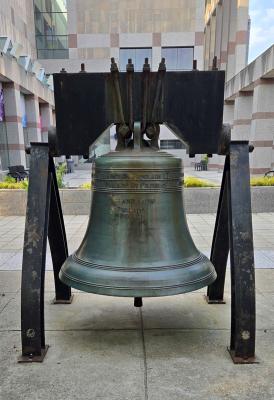
This bell is one of over 50 replicas of the iconic Liberty Bell in Philadelphia that were commissioned by the US Department of the Treasury. These reproductions were part of a 1950 savings bond drive promotion. At the conclusion of the drive, each US state and territory was gifted one of the bells. North Carolina’s bell was stewarded by numerous state agencies before being transferred to the care of the museum in 1982.
Years of display exposed to the elements took a toll on the bell. The lustrous surface of the bronze bell had developed an uneven green patina, and the black paint on the steel supports had chipped, causing rust. The bell was deinstalled from Bicentennial Plaza in June 2025 ahead of the museum construction project. Its storage offers the perfect opportunity to treat the object.
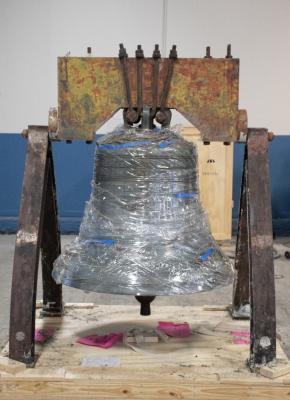
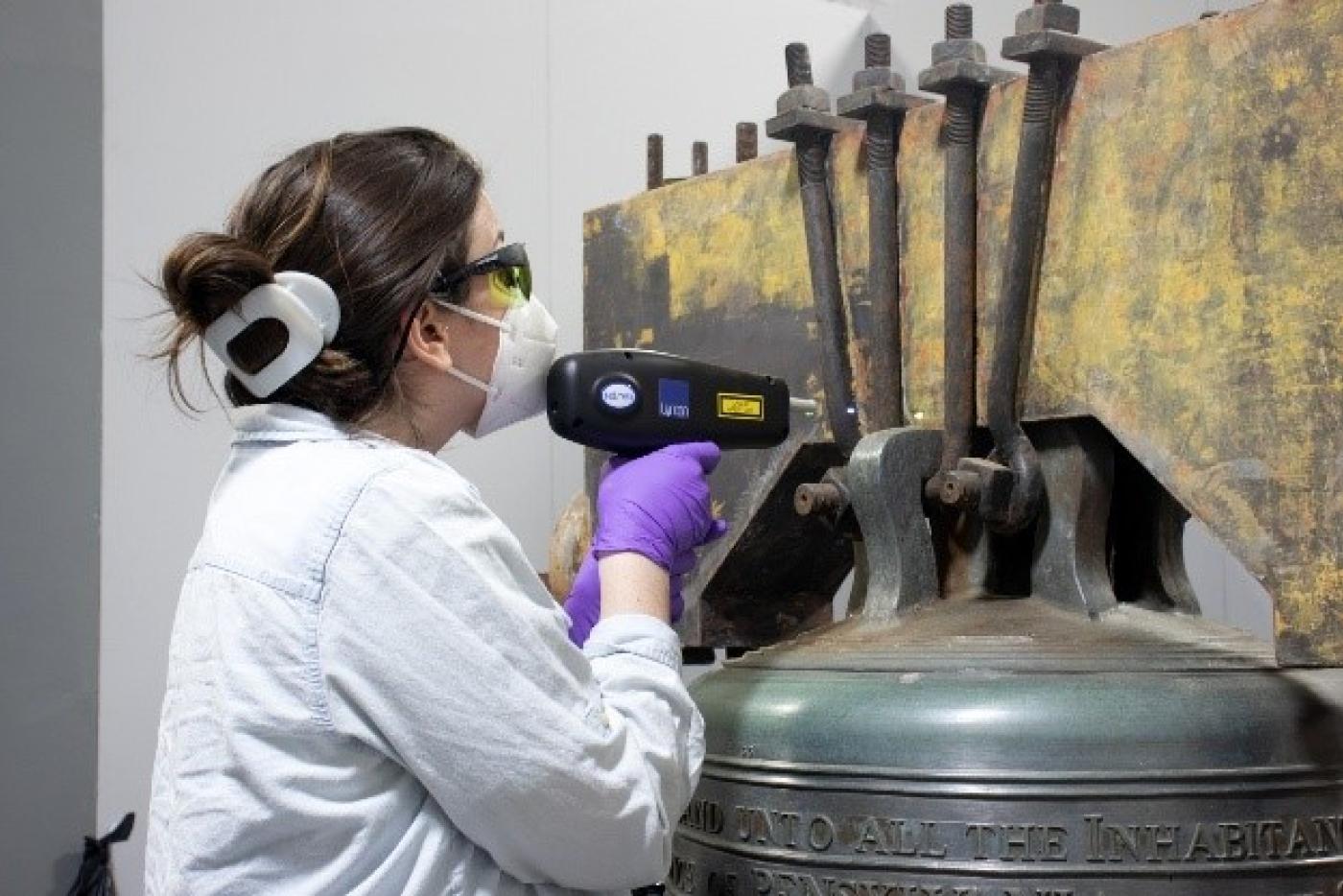
The old paint was removed with both chemical paint stripper and a new tool in our conservation tool box: laser ablation. The conservation team at the North Carolina Museum of Art generously offered the use of their Nd:YAG Laser for this project. Originally used for dermatological treatments, this laser emits pulses of a single wavelength of light that removes paint while leaving the metal beneath unharmed. The resulting bare metal surface should provide excellent adhesion to the new protective coating for many years to come.
Through the treatment process we made some unexpected discoveries! We uncovered several previous paint layers on the robust steel cross piece that directly supports the bell, known as the headstock. The oldest of the paint layers on the headstock is a bright yellow that was likely the primer. On the steel legs, we found evidence of previously horizontal cross braces that stabilized the bell.
The collections staff at both the NCMOH and the NCMA are excited for the bell to be featured in the July 4th celebrations in downtown Raleigh and hope this project will foster further DNCR conservation collaborations.
____________________________________________________________________________
This article was originally published in Circa Magazine, the museum’s biannual publication made possible through the generous support of the North Carolina Museum of History Foundation.