
There’s nothing like biting into a cool, refreshing slice of watermelon on a hot summer day. Every year, North Carolina harvests millions of pounds of this delicious fruit. According to the North Carolina Department of Agriculture, North Carolina ranks sixth in production, accounting for 6.8 percent of the country’s watermelons.
Watermelon grows well in fertile, sandy soil. The season runs from May to October, with peak months in July and August. The fruit is over 90 percent water, and is a source of vitamin A, vitamin C, potassium, and the antioxidant lycopene.
Watermelon comes in a range of shapes and sizes. Sugar baby, Congo, crimson sweet, Charleston gray, or giant jubilee varieties can be found in North Carolina. Whether it’s dusted with salt, chili-lime seasoning, tossed in a salad, or marinated and grilled like a steak, watermelon remains a versatile fruit steeped in the history of North Carolina.
The museum’s collection has many references to watermelon, showcasing its place in North Carolina’s story.
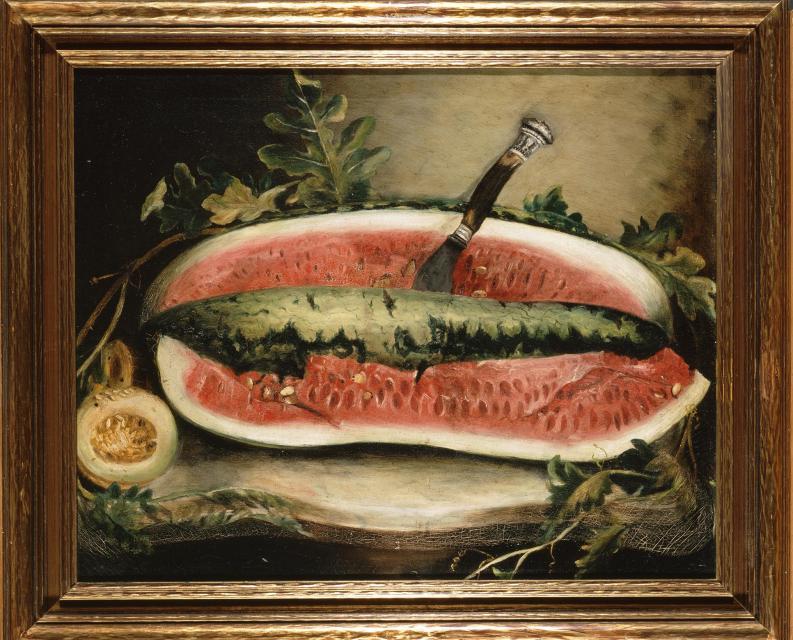
This painting, titled “Sliced Watermelon,” was painted circa 1890–1910 by Mary Lyde Hicks Williams, who was born in Faison.
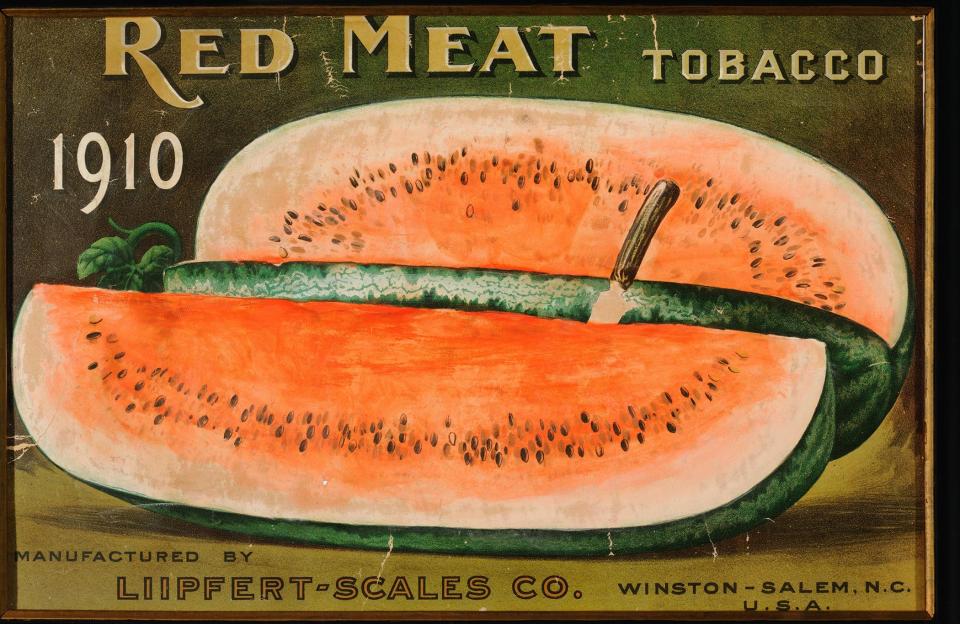
Red Meat Tobacco is inscribed on this postcard from 1910. It is an advertisement for the Liipfert-Scales Company, a tobacco manufacturer out of Winston-Salem.
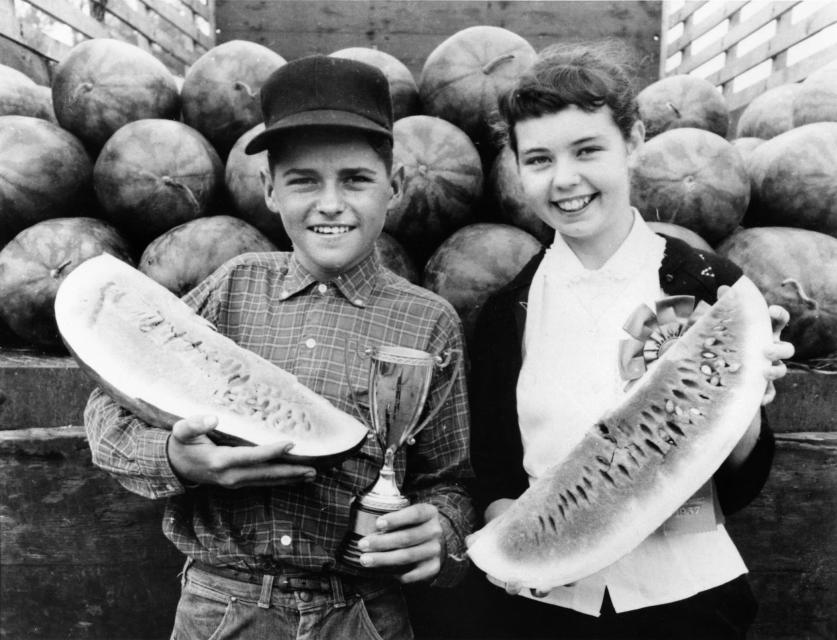
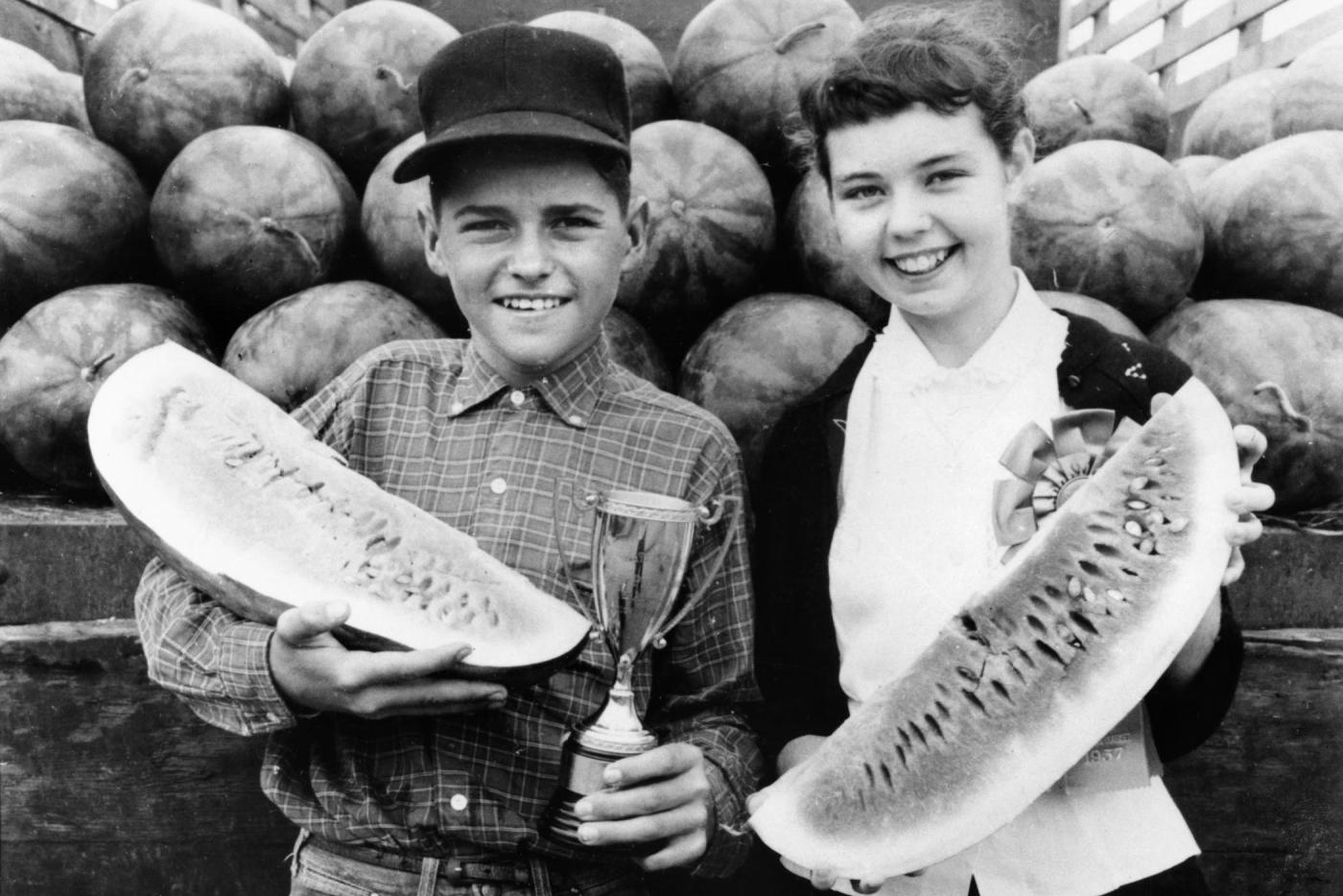
These two children are posing with their 4-H club prize-winning watermelons in 1957.

North Carolina Agriculture Commissioner L. Y. Ballentine (center) helps hold a watermelon so it can be measured, circa late 1950s–1960s.
Did you know the rind of a watermelon is also edible? It can be candied, turned into jam, or even pickled. Check out this “Watermelon Sweet Pickle” recipe by Lucy Williams Polk (1826 –1906) of Warren County.
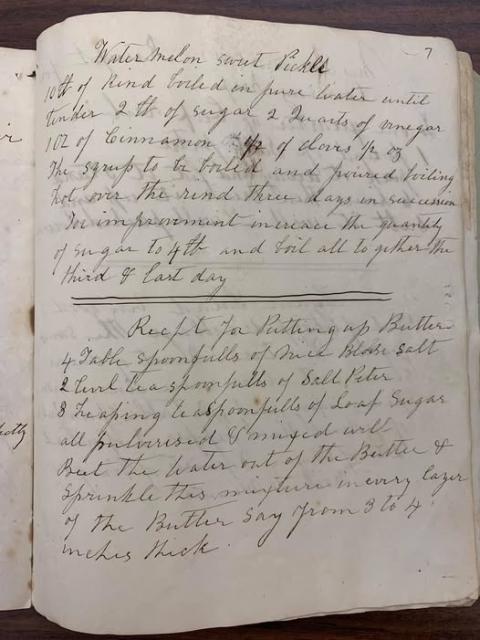
The recipe, which contains a few interesting spelling variations, reads “10 lbs of (watermelon) rind boiled in pure water until tinder 2lb of sugar 2 quarts of vinegar 1 oz of cinnamon ½ oz of cloves ½ oz of syrup to be boiled and poured boiling hot over the rind three days in succession. For improvement increace the quantity of sugar to 4lb and boil all to gether the third and last day.”
If you’re not sure how to pick a perfectly ripe watermelon, follow a few tips from The Old Farmer’s Almanac. Thump the bottom and listen for a hollow sound. It should have a yellow or cream-colored bottom and give slightly when you press on it.
Sources
https://cucurbits.ces.ncsu.edu/2024-north-carolina-standard-triploid-watermelon-cultivar-evaluation/
https://www.mayoclinichealthsystem.org/hometown-health/speaking-of-health/the-wonders-of-watermelon
https://www.almanac.com/plant/watermelons