
Artifact Packet
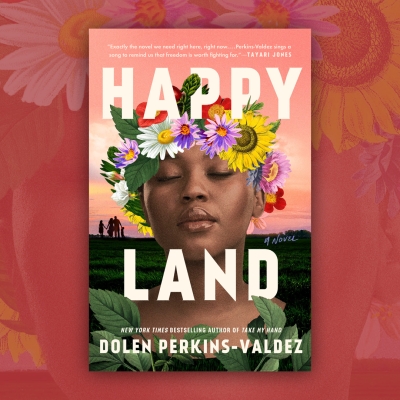
Historical artifacts in the NC Museum of History’s collection connect us to the lives and stories of North Carolinians. These items reveal crucial details about daily life in a particular period as they were used, made, worn, stitched, and written by real people. By studying these objects, we better understand how historical fiction is inspired by authentic human experiences.
In Happy Land by Dolen Perkins-Valdez, readers are invited into the lives of formerly enslaved people as they carve out new lives in the Reconstruction-era South. The artifacts below are not abstract symbols but rather everyday items that speak to the experiences of real people, whose lives echoed the journeys portrayed in the book. They allow us to engage deeper with Happy Land.
These artifacts are proof of the enormity of the physical, emotional, and mental struggle of previously enslaved people as they sought to build a happy life for themselves despite oppressive circumstances and Jim Crow laws.
Artifacts
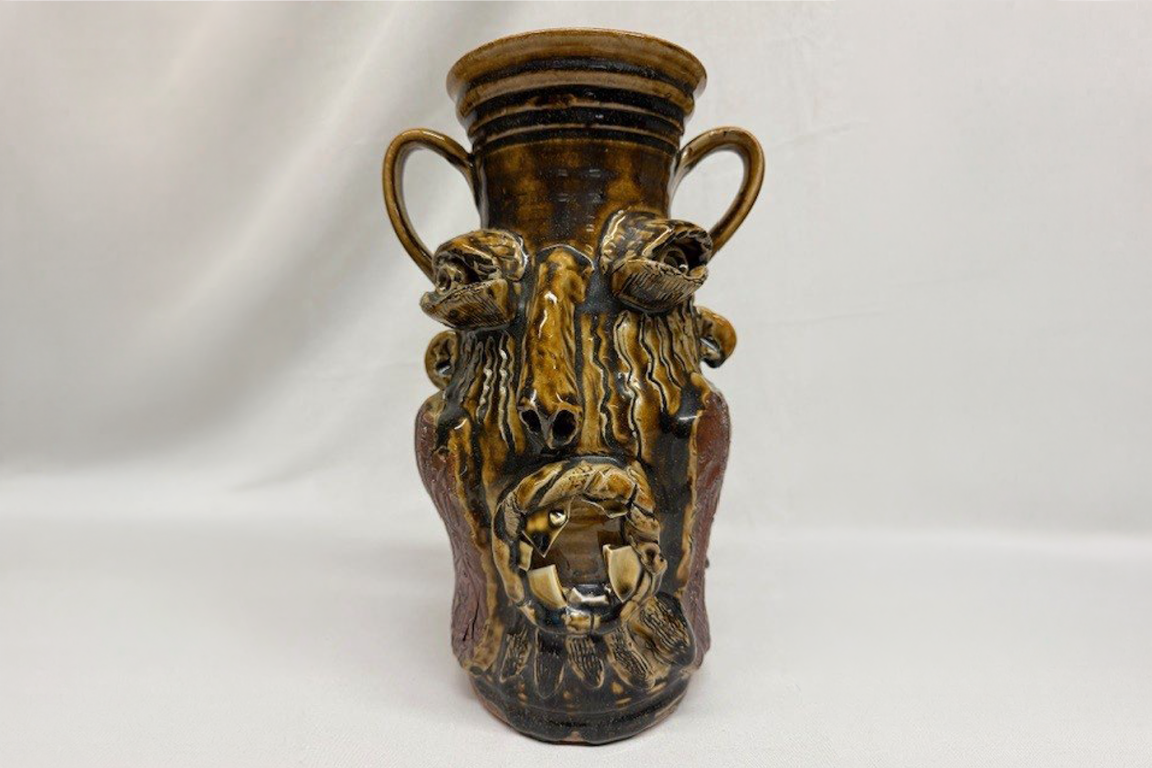
Written by Michael A. Ausbon, Curator of Decorative Arts (Previously printed in Circa, Vol. 17, no. 1.)
If someone wants me to travel to the western North Carolina mountains, I usually jump into the car like an ecstatic golden retriever! This time, my trip to western North Carolina to visit Jim McDowell, known as “the Black Potter,” felt ominous. What would I find after the devastation of 2024’s Hurricane Helene? Spiritual music, rural folklore, and mountain magic have always flourished among the people of the Southern Appalachians. Did any of the familiar spirits of western North Carolina remain to welcome me as they had so often before?
Approaching Weaverville, my trepidation started to lift. On both sides of the highway, I saw firsthand the community’s resilient determination to make things “right again.” When I arrived at Jim’s place, his partner Jan welcomed me and ushered me into the studio. With great relief, I saw Jim surrounded by his latest face jug creations—undeniable evidence that the Appalachian spirit had survived the deluge. Here, Jim’s hands have reincarnated spirits of the past into these face jugs, resurrecting and preserving an ancient heritage and protecting a cultural legacy. “I blur the lines of folk art and academic art.”
When enslaved Africans brought their artistic traditions and cultural expressions to the Carolinas, discriminatory European settlers often misunderstood it. Dismissing African practices as “voodoo,” they found one tradition particularly troubling: the African funerary practice of placing ceremonial face jugs—sometimes called “ugly jugs”—on the graves of enslaved Africans. They thought it was likely some form of dark magic, probably a tad devilish. Ironically in the African custom, the jug and its contents were used for protection.
Jim discovered his craft as a young soldier stationed in Germany, where he came across a pottery shop. Struggling with the language, Jim motioned to the potters that he wanted to learn. Three times he asked, and three times they refused. But on the fourth attempt, he says, “They handed me a broom. I swept the shop for days.” As he worked, his father’s voice echoed in his memory: “If you want to learn it, you’ll do it.” Finally, they began to teach him to throw, glaze, and fire pottery.
Meanwhile, Jim discovered an ancestral connection to pottery through his four-times great aunt Evangelene. Also a potter, she crafted face jugs in Jamaica.
Face jugs are an acquired taste; bulging eyes and jagged teeth adorn their countenances. Scholars credit enslaved Africans in Edgefield, South Carolina, with creating the classic Southern face jug. In the mid-19th century, African and enslaved African American potters likely created such pots for funerary customs and to “scare off” spiritual and physical intruders from the gravesite. White potters of the early 20th century appropriated the face jug and created novelty ones without understanding the cultural importance to the African tradition. The genre continues to evolve with modern potters.
Jim understands how his craft preserves and shapes culture. Jim emphatically declares, “I make face jugs to honor and remember my ancestors.” For more than 19 years, he has interpreted the life of formerly enslaved potter David “Dave” Drake (1800–1870) of South Carolina. A literate craftsman, Dave inscribed quips and verses on his pots, often commenting on life in bondage. He proudly asserts, “I made this jar 29 July 1858,” and ponders, “I wonder where is all my relations, Friendship to all—and every nation 16 August 1857.”
To honor Dave’s legacy and to inspire today’s leaders and artisans, Jim etches a memorable line or two on every face jug he creates. It was one such jug that caused my trip. The North Carolina Museum of History Foundation acquired the jug for our museum collection. As Jim ran his hands lovingly over this creation one last time, his fingers stopped on Tarheel native Maya Angelou’s words: “We may have defeats, but we are not defeated.” Moving down, his fingers paused over the wisdom of W. E. B. DuBois: “Either America will destroy ignorance, or ignorance will destroy the United States.” His fingers stopped finally on an urgent appeal, “VOTE VOTE VOTE VOTE.”
Jim’s jugs embody the stories of “people who were brought here against their will, overcame obstacles, and thrived by their connection to the motherland.” Even as he insists, “I only look forward. I never look back,” I consider Jim a kind of storyteller in clay, preserving and defending the legacy of his African and American ancestors. “These jugs will last longer than you or I. . . . I’m taking back our history one jug at a time.”
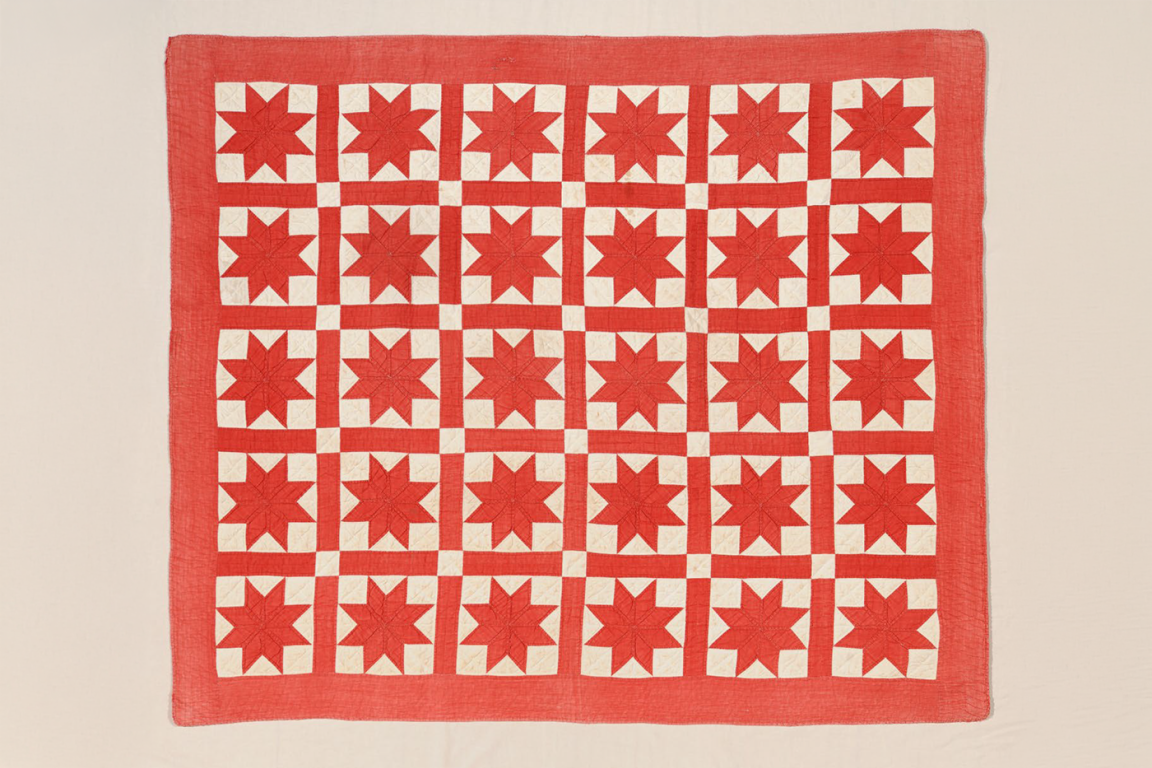
Written by Diana Bell-Kite, Curator of Textiles and Clothing (Previously printed in Quilt Speak.)
In 1860 an unnamed enslaved woman from Warren County made a quilt. She pieced 30 LeMoyne Stars in red on a white ground and separated them with red sashing, white corner blocks, and a thick red border. She quilted the piece neatly in diagonal lines and presented it to a new baby—the son of her enslavers.1
According to descendant Ella Egerton Jonson, writing in the mid-20th century, the “Quilt [was] Made by Papa’s colored Mammy in 1860. Papa’s Mother died when he was 2 weeks old.”2 “Papa” was Joseph Eliza Egerton, the son of Joseph John and Eliza Baker Egerton, Warren County landowners. The Egertons married in 1851 and had two daughters, Anna and Mary, prior to Joseph Eliza’s birth.3 Complications from his delivery likely led to Eliza’s demise, and as a result, the enslaved woman Joseph’s daughter later referred to as “Mammy” probably played a pivotal role in his early development.4
Who was this woman? By 1860 Joseph John Egerton had enslaved 13 individuals.5 Five of these people were women, and four of them were old enough
to have made the quilt. All four women, aged 65, 35, 24, and 16, would possibly have had the sewing skills to create such a bedcover, but the 16- and 24-year-olds likely had yet not gained the relative seniority required to be referred to as “Mammy.” Was the quilt maker either the 65-year-old or the 35-year-old? Or maybe both worked together—as groups of women often did—to quilt the piece.
Post-emancipation records show one African American “domestic servant” living with the Egerton family, but her age does not correspond to that of any of the aforementioned women. In 1870 most of the Egertons’ neighbors were African American members of the Alston family.6 Could any of these women have been the quilt maker or makers formerly enslaved by the Egertons?
Like so many enslaved people, this bedcover’s maker proves difficult to trace from slavery to freedom. Perhaps she moved on to rejoin lost family once free, or maybe she stayed nearby. Other than this quilt and the story her enslavers handed down with it, knowledge of her life is hard to piece together. We do know that she lived. Her red-and-white creation remains as a testament to her existence and her skill.7
- Note by Ella M. Egerton Jonson, n.d., Item History File 2018.24.1, NC Museum of History.
- Note by Jonson.
- North Carolina Marriage Records, Ancestry.com: entry for Joseph Egerton, Warren County, January 18, 1851; 1860 US Census, Population Schedule, Ancestry.com: Warren County, NC, Sheet 29, Dwelling 216, J. J. Egerton.
- Note by Jonson.
- 1860 US Census, Slave Schedule, Ancestry.com: Warren County, NC, Sheet 43, J. J. Egerton.
- 1870 US Census, Population Schedule, Ancestry.com: Warren County, NC, Township 7, Sheet 20, Dwelling 157, Joseph J. Egerton.
- For more on the challenges of tracing enslaved seamstresses from slavery to freedom, see the account of Dilsey Snoddy in Laurel Horton, Mary Black’s Family Quilts: Memory and Meaning in Everyday Life (Columbia: University of South Carolina Press, 2005), 47–48.
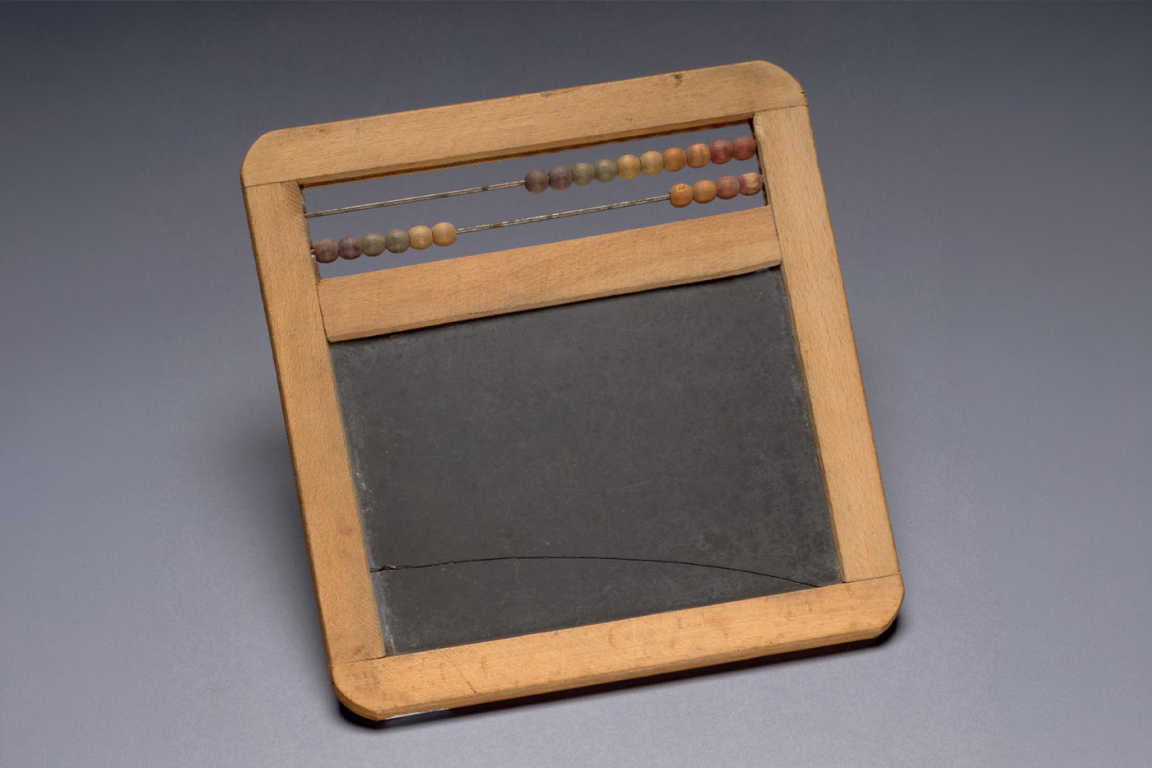
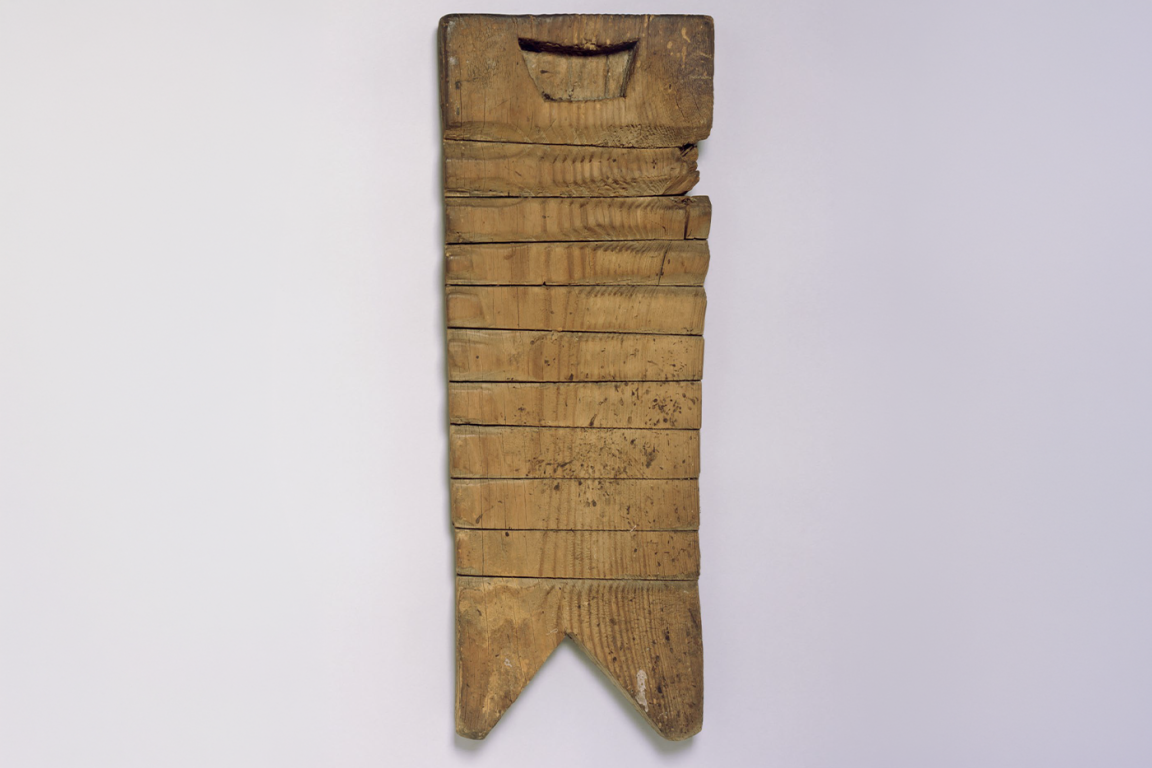
Willie B. McKoy hand-carved this washboard. He was a sharecropper in Harnett County. Sharecropping families had to make do or do without. They could receive credit from a country store or a landowner, but borrowing only pushed them further into debt. So, sharecroppers made whatever they could at home.