
The Justice and Policy of Taxing the American Colonies of Great-Britain
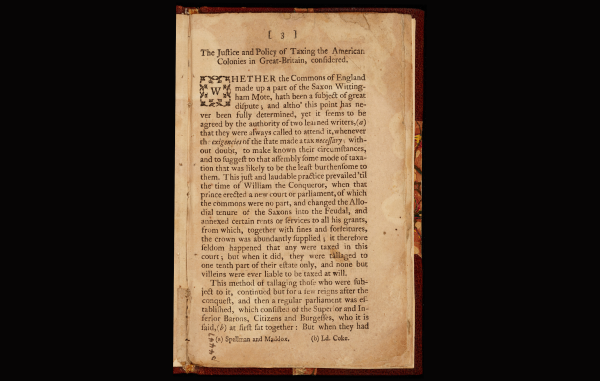
The Justice and Policy of Taxing the American Colonies in Great-Britain, considered.
WHETHER the Commons of England made up a part of the Saxon Wittingham Mote, hath been a subject of great Dispute; and altho’ this point has never been fully determined, yet it seems to be agreed by the authority of two learned writers, (a) that they always be called to attend it, whenever the exigencies of the state made a tax necessary; without doubt, to make known their circumstances, and to suggest to that assembly some mode of taxation that was likely to be the least burthensome to them. This just and laudable practice prevailed ‘til the time of William the Conqueror, when that prince erected a new court of parliament, of which the commons were no part, and changed the Allodial tenure of the Saxons into the Feudal, and annexed certain rents or services to all his grants, from which, together with fines and forfeitures, the crown was abundantly supplied; it therefore seldom happened that any were taxed in this court; but when it did, they were tallaged to one tenth part of their estate only, and none but villeins were ever liable to be taxed at will.
This method of tallaging those who were subject to it, continued but for a few reigns after the conquest, and then a regular parliament was established, which consisted of the Superior and Inferior Barons, Citizens and Burgesses, who it is said, (b) at first sat together: But when they had
Spellman and Maddox. (b) Ld. Coke.